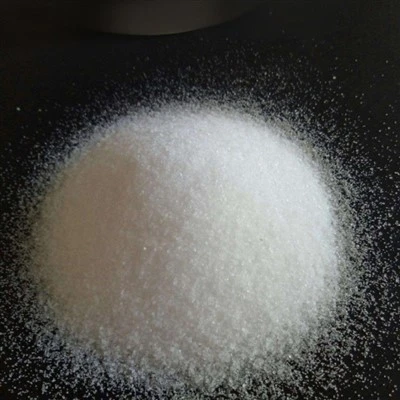
Snow Melting Agent is a blended chloride deicer: calcium chloride dihydrate as the working component, with sodium chloride and magnesium chloride balanced into it, screened to a uniform granule and treated against caking.
What separates one product from another is not the melting point printed in a brochure but what happens after the granule lands. Salt melts ice by forming brine, and brine only stays liquid while it is concentrated enough for the temperature. A saturated sodium chloride solution freezes at -21.2 °C, but the film on a road is never saturated: the ice it dissolves becomes water, traffic carries part of it away, and the concentration falls. Once it drops below what the surface needs, freezing resumes - often as a thin, clear layer that is harder to see than the snow it replaced.
This is why the grade, the granule size and the application rate are quoted together. Spread too little and the agent buys a refreeze instead of a clear road.
Advantage
Anti-Icing Before the Storm
Spread ahead of a forecast snowfall, it lays down a brine film that stops ice from bonding to the pavement in the first place.
Keeps Working After the Pass
A thin film stays on the surface once the truck has gone, which holds off refreezing through the night and into the morning.
Handles Bulk Storage
Treated granules stay loose in silos and hoppers through damp spells, so stock feeds out without hammering or bridging.
Fits Trucks and Hand Carts
The granule range suits both truck-mounted spreaders and small hand carts, so one grade covers roads, yards and footpaths.
Product Parameters
| Parameter | Range | Unit |
|---|---|---|
| CaCl₂, as dihydrate | 30 – 70 | % |
| NaCl | 20 – 60 | % |
| MgCl₂ | 5 – 15 | % |
| Moisture | ≤ 2.0 | % |
| Water-insoluble matter | ≤ 1.0 | % |
| Granule size | 1 – 6 (finer or coarser on request) | mm |
| pH, 10% solution | 6.0 – 10.0 | - |
Applications
- Bridge decks and overpasses. They lose heat from both faces and run colder than the approach road, so the brine there dilutes into the coldest surface on the network.
- Gradients and bends. A refrozen film on a slope takes away steering before it takes away grip; here the rate matters more than the ratio.
- Tunnel mouths and shaded sections. Sun never reaches them, so melt water does not run off and evaporate - it sits and dilutes.
- Railway points and switch gear. Keeps blades free to move; applied by hand or by fixed spray, and specified for low residue.
- Cold-store docks and chiller doorways. Condensate freezes at the threshold all day, not once a night.
- Ski slopes, lift stations and resort paths. Repeated light applications through the day, on surfaces walked on by people in soft boots.
- Port yards and container parks. Handling equipment needs a firm surface; frozen ruts stop a reach stacker.
- Winter concreting and aggregate stock. Prevents frozen lumps forming in sand and stone before batching.
Packaging & Logistics
Packaging
- 25kg bags (PE/PP woven bags)
- 5kg / 10kg / 20kg bags available on request
- 1000kg / 1250kg jumbo bags (industrial bulk)
- OEM packaging supported (logo, design, private label)
Shipping
- Sea freight (FCL / LCL bulk orders)
- Air freight (small urgent orders)
- Land transport (regional delivery)
Delivery Time
- Sea freight: 20–35 days depending on destination
- Air freight: 5–10 days for urgent orders
 |
 |
Why Choose Us
- Granule size proven by sieve report. Each lot ships with the distribution, so the spreader pattern can be set before the truck leaves the yard.
- Dilution and refreeze data supplied. The curves behind the rate table go to the buyer, so the gritting plan is built on the product's behaviour rather than on a supplier's claim.
- Blend set to the destination climate. Tell us the port and the winter it serves; the ratio is fixed for that market rather than for a generic catalogue.
- Trial quantities accepted. A first order can be sized to one storm's use, so the ratio is tested before a season is committed.
- Third-party testing on request. Independent laboratory analysis can accompany the shipment where a tender requires it.
- Production slot held ahead of the cold season. Contract volume is scheduled in advance instead of being rationed in the first cold week.
- Local restrictions flagged. Catchment areas, chloride-free zones and steel-adjacent structures are raised before the order, not after the delivery.

FAQ
Q: How do I set the spreader for a 1–6 mm granule?
A: Set the spinner for the width you actually need and calibrate by weight, not by dial position: catch the output in a sheet over a measured distance and weigh it. Narrow the spread on bridges and keep the pattern inside the carriageway, since granules thrown onto verges and kerbs are pure loss.
Q: Can I mix it with sand or grit?
A: Yes, and in mild cold it is a sensible economy - sand gives immediate traction while the salt works. Mix by volume on a dry day, keep the salt fraction dry, and remember the sand adds no melting capacity: on ice it only improves grip until the next freeze.
Q: Will it damage concrete or vehicles?
A: Chlorides attack unprotected steel and can scale poorly cured or low-grade concrete. That is true of every chloride deicer, including rock salt. Use the lowest effective rate, keep the material off structural steel and interior floors, and rinse vehicles and equipment after the season.
Q: Does it really work at -20 °C?
A:The calcium chloride fraction does; the sodium chloride in the blend contributes very little at that temperature. That is why the ratio matters - a 30% CaCl₂ blend at -20 °C is mostly inert weight, while a 70% blend still melts.
Q: How much should we spread?
A: Rate depends on ice thickness, surface, traffic and temperature, and it is normally set by the highway authority's own specification. As a starting point, pre-wetting and a uniform 1–6 mm cut usually allow a lower rate than dry rock salt; we can supply the blend's data sheet for your gritting plan.
Hot Tags: high quality snow melting agent, China high quality snow melting agent manufacturers, suppliers, factory