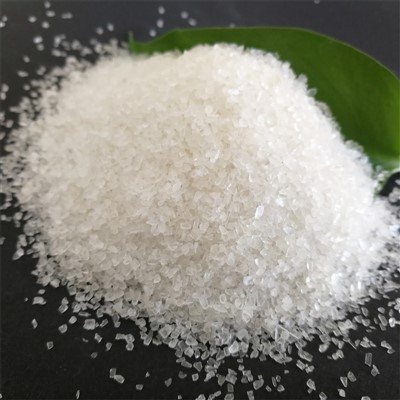
Zinc carbonate is a significant inorganic compound with various applications in industries such as ceramics, pigments, and rubber. As a professional zinc carbonate supplier, I often encounter inquiries about numerous aspects of zinc carbonate, one of the most common being its decomposition process. In this blog, I will delve into the details of how zinc carbonate decomposes, exploring the chemical reactions, influencing factors, and practical implications.
Chemical Reaction of Zinc Carbonate Decomposition
The decomposition of zinc carbonate is a fundamental chemical process that involves the breakdown of the compound into simpler substances. Zinc carbonate exists in different forms, including industrial - grade zinc carbonate and Basic Zinc Carbonate. The general chemical formula for zinc carbonate is (ZnCO_{3}). When heated, zinc carbonate undergoes thermal decomposition, following the chemical equation:
(ZnCO_{3}(s)\xrightarrow{\text{Heat}}ZnO(s) + CO_{2}(g))
This reaction indicates that solid zinc carbonate decomposes upon heating to form solid zinc oxide ((ZnO)) and carbon dioxide gas ((CO_{2})). The decomposition is an endothermic reaction, which means it requires an input of heat energy to proceed. The heat energy provides the activation energy necessary to break the chemical bonds within the zinc carbonate molecule.
Conditions for Decomposition
The decomposition of zinc carbonate mainly depends on temperature. Under normal atmospheric pressure, pure zinc carbonate begins to decompose at approximately 300 - 350 °C. As the temperature rises above this range, the decomposition rate increases significantly. The reaction reaches completion at around 600 - 700 °C, where virtually all of the zinc carbonate is converted into zinc oxide and carbon dioxide.
The presence of impurities or the form of zinc carbonate can also affect the decomposition conditions. For instance, Industrial Grade Zinc Carbonate might have different decomposition temperatures compared to high - purity zinc carbonate due to the impurities altering the thermal and chemical properties of the compound.
Observing the Decomposition Process
In a laboratory or industrial setting, it is relatively straightforward to observe the decomposition of zinc carbonate. When zinc carbonate is heated in a crucible or a furnace, the following changes can be noticed:
-
Gas Evolution: As the decomposition begins, carbon dioxide gas is released. This can be detected by passing the evolved gas through limewater ((Ca(OH){2}) solution). The limewater turns milky due to the formation of calcium carbonate ((CaCO{3})) precipitate according to the reaction (CO_{2}(g)+Ca(OH){2}(aq)\rightarrow CaCO{3}(s)+H_{2}O(l))
-
Color and Physical State Changes: Zinc carbonate is typically a white powder. As it decomposes, the white powder gradually turns into a yellowish - white powder of zinc oxide. This color change is a visible indication of the chemical transformation taking place.
Factors Affecting the Decomposition Rate
Several factors can influence the rate at which zinc carbonate decomposes:
Temperature
As mentioned earlier, temperature plays a crucial role. Higher temperatures provide more energy to the zinc carbonate molecules, enabling them to break the chemical bonds more easily. According to the Arrhenius equation, the rate constant (k) of a reaction is related to the temperature (T) by the formula (k = A\times e^{-\frac{E_{a}}{RT}}), where (A) is the pre - exponential factor, (E_{a}) is the activation energy, (R) is the gas constant, and (T) is the absolute temperature. As the temperature increases, the value of (e^{-\frac{E_{a}}{RT}}) increases, leading to a higher rate constant and thus a faster decomposition rate.
Particle Size
The particle size of zinc carbonate also impacts the decomposition rate. Smaller particles have a larger surface area per unit mass. A larger surface area allows for more contact between the zinc carbonate and the heat source, facilitating the transfer of heat energy into the particles. As a result, smaller - sized zinc carbonate particles decompose more rapidly than larger ones.
Catalysts
Although zinc carbonate decomposition is a relatively simple thermal reaction, the presence of certain catalysts can potentially increase the decomposition rate. Some metal oxides or salts can act as catalysts by lowering the activation energy of the reaction. However, the use of catalysts in zinc carbonate decomposition is not as common as in other chemical processes.


Applications Related to Zinc Carbonate Decomposition
The decomposition of zinc carbonate has important applications in various industries:
Production of Zinc Oxide
Zinc oxide is a widely used compound with applications in rubber manufacturing, ceramics, and the production of pigments. By decomposing zinc carbonate, high - quality zinc oxide can be produced. The zinc oxide obtained from the decomposition process can be further processed and refined to meet the specific requirements of different industries.
Carbon Dioxide Capture and Utilization
The carbon dioxide released during the decomposition of zinc carbonate can be captured and utilized in other processes. For example, it can be used in the food and beverage industry for carbonation, or in the chemical industry for the synthesis of various compounds such as urea.
Quality Control in Zinc Carbonate Decomposition
As a zinc carbonate supplier, ensuring the quality and consistency of the decomposition process is of utmost importance. We carefully control the source and purity of our zinc carbonate products. Raw materials are sourced from reliable suppliers and undergo strict quality checks.
In the production process, we use advanced temperature - control systems to ensure that the decomposition occurs at the optimal temperature range. This helps to produce high - quality zinc oxide with consistent properties. Additionally, we conduct regular quality inspections of the final products to meet the high - standards demanded by our customers.
Conclusion
Understanding how zinc carbonate decomposes is essential for various industries and applications. The thermal decomposition of zinc carbonate into zinc oxide and carbon dioxide is a well - studied chemical process. Factors such as temperature, particle size, and the presence of catalysts can significantly affect the decomposition rate.
If you are in need of high - quality zinc carbonate for your industrial applications, whether it is Industrial Grade Zinc Carbonate or Basic Zinc Carbonate, please feel free to contact us for procurement and further discussions. We are committed to providing you with the best products and services.
References
- Atkins, P. W., & de Paula, J. (2014). Physical Chemistry. Oxford University Press.
- Housecroft, C. E., & Sharpe, A. G. (2012). Inorganic Chemistry. Pearson.
- Holleman, A. F., & Wiberg, E. (2001). Inorganic Chemistry. Academic Press.