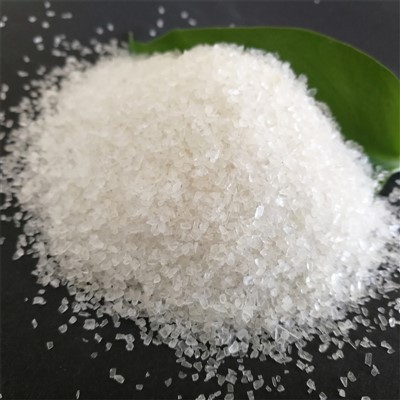
Sodium sulfate, a versatile inorganic compound, plays a significant role in the production of enzymes. As a leading sodium sulfate supplier, I am excited to delve into the various ways sodium sulfate is utilized in this crucial industrial process.
The Basics of Sodium Sulfate
Before exploring its role in enzyme production, let's understand sodium sulfate itself. Sodium sulfate exists in two main forms: hydrated and anhydrous. The anhydrous form, known as Sodium Sulfate Anhydrous, is a white crystalline solid with the chemical formula Na₂SO₄. It is highly soluble in water and has a wide range of applications across different industries. The 99% pure form, 99% Sodium Sulfate, is particularly sought after for its high quality and consistent performance.
Sodium Sulfate in Enzyme Stabilization
One of the primary uses of sodium sulfate in enzyme production is for enzyme stabilization. Enzymes are biological catalysts that are often sensitive to changes in temperature, pH, and other environmental factors. Sodium sulfate can help protect enzymes from denaturation, which is the process by which an enzyme loses its three - dimensional structure and, consequently, its catalytic activity.
When added to enzyme solutions, sodium sulfate can act as a kosmotropic agent. Kosmotropes are substances that tend to stabilize the native structure of proteins by promoting the formation of ordered water structures around the protein molecules. This ordered water shell helps to maintain the integrity of the enzyme's active site, ensuring that it remains functional under various conditions.
For example, in the production of industrial enzymes used in laundry detergents, sodium sulfate can be added to the enzyme formulation to extend the shelf - life of the product. By stabilizing the enzymes, the detergent can maintain its cleaning power over a longer period, even when stored at different temperatures.
Osmotic Regulation
Sodium sulfate also plays a crucial role in osmotic regulation during enzyme production. In fermentation processes, which are commonly used to produce enzymes, microorganisms are grown in a nutrient - rich medium. The osmotic pressure of the medium can significantly affect the growth and metabolism of these microorganisms.


By adding sodium sulfate to the fermentation medium, the osmotic pressure can be adjusted to an optimal level for the growth of the enzyme - producing microorganisms. This is important because if the osmotic pressure is too high or too low, it can lead to cell shrinkage or swelling, respectively, which can inhibit the growth of the microorganisms and reduce enzyme production.
In addition, proper osmotic regulation can also influence the secretion of enzymes from the microorganisms. Some microorganisms secrete enzymes into the surrounding medium as a way to break down complex nutrients. By maintaining the right osmotic conditions with sodium sulfate, the secretion process can be enhanced, leading to higher yields of enzymes.
Precipitation and Purification
Another important application of sodium sulfate in enzyme production is in the precipitation and purification of enzymes. After the fermentation process, the enzyme needs to be separated from the fermentation broth, which contains various impurities such as cells, cell debris, and other metabolites.
Sodium sulfate can be used as a salting - out agent. Salting - out is a process in which a high concentration of a salt is added to a protein solution to reduce the solubility of the protein, causing it to precipitate out of the solution. When sodium sulfate is added to the enzyme - containing fermentation broth, it can selectively precipitate the enzymes while leaving many of the other impurities in the solution.
The precipitated enzymes can then be easily separated from the supernatant by filtration or centrifugation. This is a relatively simple and cost - effective method for purifying enzymes, especially on an industrial scale. After precipitation, the enzymes can be further purified using other techniques such as chromatography to obtain a highly pure enzyme product.
Impact on Enzyme Activity
In some cases, sodium sulfate can also have a direct impact on enzyme activity. Some enzymes require specific ions or salts in their environment to function optimally. Sodium sulfate can provide sodium and sulfate ions, which may be necessary for the proper functioning of certain enzymes.
For example, some enzymes have active sites that can interact with sodium or sulfate ions, which can help to stabilize the transition state of the enzymatic reaction. This can lead to an increase in the reaction rate and the overall efficiency of the enzyme - catalyzed process.
However, it is important to note that the effect of sodium sulfate on enzyme activity can be concentration - dependent. At low concentrations, it may enhance enzyme activity, but at high concentrations, it can have an inhibitory effect. Therefore, careful optimization of the sodium sulfate concentration is required in enzyme production processes.
Influence on Enzyme Selectivity
Sodium sulfate can also influence the selectivity of enzymes. Enzyme selectivity refers to the ability of an enzyme to catalyze a specific reaction or a set of reactions while ignoring others. By altering the ionic environment with sodium sulfate, the selectivity of an enzyme can be modulated.
In some multi - step enzymatic reactions, the presence of sodium sulfate can shift the equilibrium of the reactions towards the desired product. This is because the ions from sodium sulfate can interact with the enzyme - substrate complexes and influence the binding affinity of the enzyme for different substrates. As a result, the enzyme can be made more selective for the production of a particular product, which is highly beneficial in industrial applications where specific products are required.
Cost - effectiveness in Enzyme Production
From an economic perspective, sodium sulfate is an attractive option for enzyme production. It is a relatively inexpensive and readily available chemical. Compared to some other additives used in enzyme production, such as expensive salts or specialized stabilizers, sodium sulfate offers a cost - effective solution.
The use of sodium sulfate can reduce the overall production cost of enzymes without sacrificing the quality of the final product. This is particularly important in industries where cost is a major factor, such as the food and beverage industry, where enzymes are used in processes like brewing, baking, and cheese - making.
Environmental Considerations
In addition to its functional benefits, sodium sulfate is also environmentally friendly. It is a non - toxic and biodegradable compound. When used in enzyme production, it does not pose significant environmental risks.
After the enzyme production process, the sodium sulfate can be easily separated from the final product and, in some cases, recycled. This not only reduces waste but also makes the enzyme production process more sustainable.
Conclusion
In conclusion, sodium sulfate is an indispensable component in the production of enzymes. Its roles in enzyme stabilization, osmotic regulation, precipitation and purification, as well as its impact on enzyme activity and selectivity, make it a valuable tool for the enzyme industry.
As a sodium sulfate supplier, we understand the importance of providing high - quality sodium sulfate products to meet the specific needs of enzyme producers. Our 99% Sodium Sulfate and Sodium Sulfate Anhydrous products are carefully manufactured to ensure consistent quality and performance.
If you are involved in enzyme production and are looking for a reliable sodium sulfate supplier, we would be more than happy to discuss your requirements. Contact us to start a procurement negotiation and discover how our sodium sulfate products can enhance your enzyme production process.
References
- Creighton, T. E. (1993). Proteins: Structures and Molecular Properties. W. H. Freeman and Company.
- Stryer, L., Berg, J. M., & Tymoczko, J. L. (2002). Biochemistry. W. H. Freeman and Company.
- Roe, J. H. (1955). The use of salts in the purification of proteins. Advances in Protein Chemistry, 10, 1 - 59.