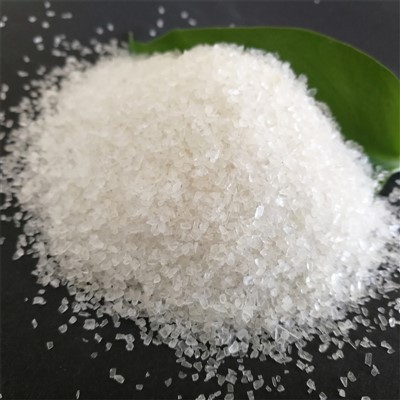
Hey there! As a supplier of Zinc Sulfate Monohydrate, I often get asked about its reaction mechanism in water treatment. So, let's dive right in and explore this topic.
First off, what's Zinc Sulfate Monohydrate? Well, it's a chemical compound with the formula ZnSO₄·H₂O. You can find more details about it on our website Zinc Sulfate Monohydrate. This compound is pretty versatile and has a bunch of applications, including in water treatment.
When Zinc Sulfate Monohydrate is added to water, the first thing that happens is dissociation. In water, the compound breaks down into its constituent ions. The chemical equation for this dissociation is:
ZnSO₄·H₂O(s) → Zn²⁺(aq) + SO₄²⁻(aq) + H₂O(l)
The solid Zinc Sulfate Monohydrate dissolves in water, releasing zinc ions (Zn²⁺) and sulfate ions (SO₄²⁻) into the aqueous solution. This dissociation is crucial because these ions are the ones that play key roles in water treatment.
One of the main functions of zinc ions in water treatment is their ability to act as a coagulant aid. Coagulation is an important step in water treatment where small particles in the water are made to clump together so that they can be easily removed. Zinc ions can help in this process by neutralizing the negative charges on the surface of the suspended particles.
Most of the suspended particles in water carry a negative charge. When zinc ions, which have a positive charge, are introduced into the water, they can attract and neutralize these negative charges. This reduces the electrostatic repulsion between the particles, allowing them to come closer together and form larger aggregates. These larger aggregates, called flocs, are then easier to settle out or filter from the water.
Another aspect is the role of sulfate ions. Sulfate ions can participate in chemical reactions with other substances in the water. For example, they can react with calcium and magnesium ions that are often present in hard water. The reaction between sulfate ions and calcium or magnesium ions can form insoluble salts, such as calcium sulfate (CaSO₄) or magnesium sulfate (MgSO₄). These insoluble salts can precipitate out of the solution, which helps in reducing the hardness of the water.
In addition to its coagulation and water - softening properties, Zinc Sulfate Monohydrate also has some antibacterial effects. Zinc ions can interfere with the metabolic processes of bacteria. They can bind to certain enzymes in the bacteria, inhibiting their activity and ultimately leading to the death of the bacteria. This makes it useful in preventing the growth of harmful bacteria in water supplies.
Now, let's talk about the practical side of using Zinc Sulfate Monohydrate in water treatment. The dosage of Zinc Sulfate Monohydrate depends on several factors, such as the quality of the water, the concentration of suspended particles, and the desired level of treatment. Generally, a small amount is added initially, and then the water is tested to see if the desired results are achieved. If not, the dosage can be adjusted accordingly.
It's also important to note that while Zinc Sulfate Monohydrate is effective in water treatment, it should be used within the recommended limits. Excessive amounts of zinc in water can have negative impacts on human health and the environment. So, proper monitoring and control are essential.
Zinc Sulfate Monohydrate is also used in other industries. For instance, it's a popular Zinc Sulfate Fertilizer. In agriculture, zinc is an essential micronutrient for plants. It plays a crucial role in various physiological processes, such as enzyme activation, protein synthesis, and hormone regulation. When used as a fertilizer, Zinc Sulfate Monohydrate can help improve the growth and yield of crops.
If you're involved in water treatment or agriculture and are looking for a reliable source of Zinc Sulfate Monohydrate, we're here to help. We've been in the business for a long time, and we offer high - quality Zinc Sulfate Monohydrate at competitive prices. Our product is carefully manufactured to meet the strictest quality standards, ensuring its effectiveness in your applications.


Whether you need a small quantity for a laboratory experiment or a large volume for an industrial project, we can supply it. We understand that every customer has unique requirements, and we're committed to providing personalized service. If you have any questions about our product, its reaction mechanism, or how to use it in your specific application, don't hesitate to reach out.
We believe in building long - term relationships with our customers. That's why we're always available to offer technical support and advice. We want you to be completely satisfied with your purchase and the results you achieve with our Zinc Sulfate Monohydrate.
So, if you're interested in purchasing Zinc Sulfate Monohydrate for water treatment, fertilizer, or any other application, get in touch with us. We're eager to discuss your needs and work out a deal that suits you.
In conclusion, Zinc Sulfate Monohydrate is a powerful and versatile compound in water treatment. Its ability to dissociate into ions, act as a coagulant aid, reduce water hardness, and have antibacterial effects makes it a valuable tool in ensuring clean and safe water. And with our high - quality supply, you can be confident in achieving the best results.
References:
- "Water Treatment Principles and Design" by David W. Hendricks and George Tchobanoglous
- "Handbook of Chemical Technology and Pollution Control" by Philip A. Williams and James F. K. Wilkinson