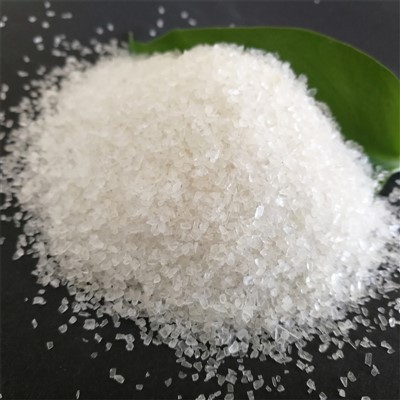
Hey there! As a carbonate supplier, I often get asked about the pyroelectric properties of carbonates. So, I thought I'd take a deep - dive into this topic and share what I know.
First off, let's quickly understand what pyroelectricity is. Pyroelectricity is the ability of certain materials to generate an electric potential when they experience a change in temperature. It's like these materials have a built - in temperature - to - electricity converter.
When it comes to carbonates, not all of them exhibit significant pyroelectric properties. But there are a few that do show some interesting behavior.


Let's start with calcium carbonate ((CaCO_{3})). You can find it in different forms like calcite, aragonite, and vaterite. Calcite, which is one of the most common forms of calcium carbonate, has a relatively complex crystal structure. This structure plays a big role in its physical properties. In some cases, under specific temperature changes, calcite can generate a small electric charge. The pyroelectric effect in calcite is related to the movement of ions within its crystal lattice when the temperature fluctuates.
Now, if you're interested in high - quality calcium carbonate, we've got 1000 Mesh Powder Calcium Carbonate. It's finely ground and has a wide range of applications, from the construction industry to the production of plastics.
Sodium carbonate ((Na_{2}CO_{3})) is another important carbonate. It's commonly known as soda ash. In general, sodium carbonate doesn't have extremely prominent pyroelectric properties compared to some other materials. But in certain experimental set - ups, a very slight pyroelectric response can be detected. The reason for this weak response is its ionic nature and the way its crystal structure arranges. Sodium carbonate exists in different hydrates, like the decahydrate ((Na_{2}CO_{3}\cdot10H_{2}O)) and the monohydrate ((Na_{2}CO_{3}\cdot H_{2}O)). These hydrates can have different physical properties, and the presence of water molecules in the crystal structure can influence the overall behavior when the temperature changes.
If you're in the food industry, our Food Grade Sodium Carbonate is a great option. It meets all the necessary safety standards and can be used in various food - related processes.
Then there's sodium bicarbonate ((NaHCO_{3})), also known as baking soda. Baking soda is a well - known household item, but it also has some interesting scientific aspects. In terms of pyroelectricity, it shows a very minor effect. The crystal structure of sodium bicarbonate is such that when it's heated or cooled, there's a minimal rearrangement of ions, which can lead to a tiny electric potential. This effect is so small that it's not really used in any large - scale applications, but it's still an interesting property to study. And of course, if you need baking soda for your baking or other uses, we offer Baking Soda Sodium Bicarbonate.
The pyroelectric properties of carbonates are also affected by external factors. For example, the purity of the carbonate sample matters a lot. Impurities can disrupt the regular crystal structure and reduce the pyroelectric effect. Also, the way the carbonate is prepared, like the temperature and pressure conditions during synthesis, can have an impact on its pyroelectric behavior.
In some research, scientists are looking into enhancing the pyroelectric properties of carbonates. They're trying different methods, like doping the carbonate with other elements. By adding small amounts of specific elements, they hope to change the crystal structure in a way that increases the pyroelectric response. This could potentially open up new applications for carbonates, such as in energy - harvesting devices.
So, why should you care about the pyroelectric properties of carbonates? Well, even if the effect is small in most carbonates, it can still have some practical uses. For example, in some sensors, a small change in electric potential due to temperature can be detected and used to measure temperature changes accurately. In the future, with more research, we might see carbonates being used in more high - tech applications.
As a carbonate supplier, we're always looking to provide the best quality products. Whether you're interested in the scientific aspects of carbonates or just need them for regular industrial or household use, we've got you covered.
If you're thinking about purchasing carbonates for your business or project, don't hesitate to reach out. We can have a detailed discussion about your requirements, and I'm sure we can find the perfect carbonate solution for you.
In conclusion, while the pyroelectric properties of carbonates are not as well - known as some other materials, they still hold a lot of potential. With ongoing research and development, we might discover new and exciting applications for these common compounds.
So, if you're in the market for carbonates, give us a shout. We'll work together to make sure you get the right product at the best price.
References
- "Introduction to Solid State Physics" by Charles Kittel
- Various research papers on carbonate materials and pyroelectricity from scientific journals.